Brisbane small business bookkeeping doesn’t need to be complicated. Most businesses in the city are small, and many are run by one person. So the goal is simple: clean records, on-time BAS and a clear view of your cash.
This guide is for Brisbane sole traders and micro businesses of every kind. That includes consultants, cafes, salons, health practitioners, online sellers, landlords and tradies. Work through these eight habits, and your books will stay under control all year.
Why Brisbane small business bookkeeping matters
Brisbane City Council’s economic profile counted 145,916 registered businesses in June 2025. Of those, 62.5% had no employees. Another 34.2% employed between 1 and 19 people.
In other words, more than 96% of Brisbane businesses are sole operators or small teams. Most don’t have a finance department. Instead, the owner does the books at night or on weekends. That’s why simple, repeatable habits matter so much.
1. Keep business and personal money separate
First, open a separate bank account for the business. Then run all business income and expenses through it.
Mixing personal and business spending is one of the most common bookkeeping problems. It makes reconciling slow, and it hides your real profit. A separate account fixes both at once.
2. Use cloud software with bank feeds
Next, choose cloud accounting software and connect your bank feeds. Transactions then flow in each day, ready to code.
Not sure which software suits you? Our guide to Xero or QuickBooks compares the two. Either way, set aside a regular time each week to reconcile.
3. Keep records the ATO way
The ATO says most business records must be kept for 5 years. That includes receipts, invoices and bank statements.
So snap receipts on your phone and attach them in your software straight away. As a result, you won’t be hunting through the car or a shoebox at BAS time.
4. Watch your GST turnover
Many Brisbane sole traders start below the GST threshold. However, a few good months can change that quickly.
According to the ATO, you must register for GST once your GST turnover reaches $75,000 or more. Taxi and rideshare drivers must register regardless of turnover. Up-to-date books show you where your turnover sits, before it becomes a problem.
5. Set a BAS rhythm and put GST aside
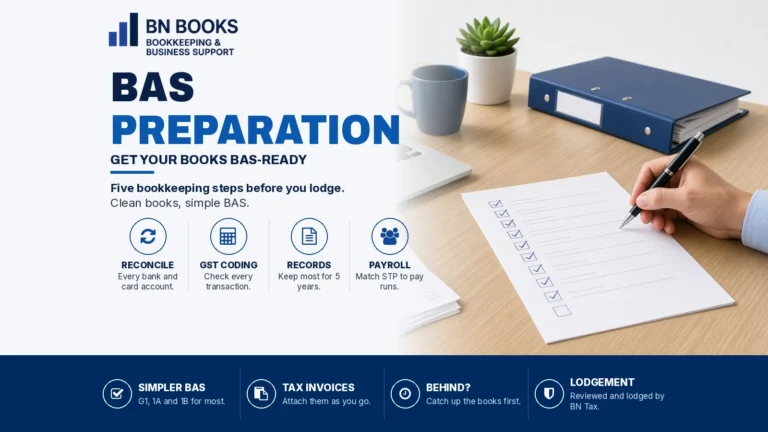
Once you’re registered, BAS becomes part of the routine. The ATO lists the quarterly BAS due dates as 28 October, 28 February, 28 April and 28 July.
A simple habit helps here. Move the GST from each sale into a separate savings account. Then the money is waiting when your BAS is due. For more ideas, see how good bookkeeping improves cash flow.
Want your books set up properly from the start? Give us a call or send us a text.
6. Get payroll right when you hire
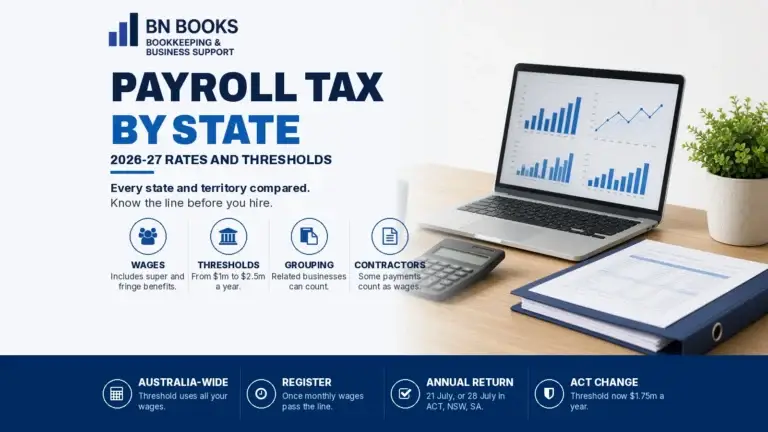
Hiring your first employee is a big step for a micro business. Before they start, read the government’s guide to hiring employees.
You’ll also need payroll software that reports through Single Touch Payroll. In addition, super rules changed on 1 July 2026. The ATO says super must now reach your employee’s fund within 7 business days after payday.
7. Track Brisbane City Council costs
Council fees are easy to forget, because they don’t come every month. For instance, Brisbane cafes and restaurants generally need a food business licence, which is valid for 12 months.
Similarly, working from home can involve council rules. Council’s home office page explains that a home-based business may need planning approval. Record any fees and renewal dates in your books, so they don’t catch you out.
8. Review your Brisbane small business bookkeeping monthly
Finally, look at your profit and loss report and bank balance once a month. It only takes ten minutes.
Ask yourself three questions. Are sales up or down? Are any customers paying late? And is there enough cash for your next BAS and pay run? If the answers are hard to find, our 7 signs your business bookkeeping needs attention may help.
Free local support for Brisbane small businesses
Brisbane has some useful free support. Council’s business hubs include the Suburban Business Hub in Nundah, which offers free co-working. Meanwhile, the Brisbane Business Hub in the city runs free workshops and mentoring.
You can also call council’s Business Hotline on 133 263, 24 hours a day. It covers topics like food licensing and home businesses.
Your Brisbane small business bookkeeping checklist
Here’s the short version:
- Run all business money through a separate account
- Connect bank feeds and reconcile weekly
- Snap and store receipts as you go
- Check your GST turnover
- Put GST aside for each BAS
- Set up STP and pay super within 7 business days
- Record council fees and renewal dates
- Review profit and cash every month
Get help with small business bookkeeping in Brisbane
Small business bookkeeping in Brisbane is easier with a hand. BN Books helps Brisbane sole traders and small businesses with reconciliations, payroll, BAS and catch-up work. We’re 100% online, so we serve Brisbane businesses online.
Find out more on our Bookkeeping in Brisbane page. If you need tax help, our sister business BN Tax can help with tax returns and BAS in Brisbane. To see every area we cover, visit the Business Ninjas Areas we service page.
Need help with your Brisbane small business bookkeeping?
Have a friendly, no-pressure chat about your bookkeeping, BAS or payroll. We know Small Business!
Brisbane small business bookkeeping FAQs
Do Brisbane small businesses need a bookkeeper?
Not always, but it helps once transactions, staff or BAS start taking up your evenings. A bookkeeper keeps records current, so you can focus on customers.
When do I need to register for GST?
The ATO says you must register once your GST turnover reaches $75,000 or more. Regular bookkeeping shows you when you’re getting close.
Can BN Books help if I’m in Brisbane but you’re remote?
Yes. We work 100% online with Brisbane businesses. See our bookkeeping in Brisbane page for details.
How often should I review my books?
Once a month is a good habit. A monthly review helps you spot cash flow problems and BAS amounts early.